Intelligent IT Service Automation: Key Strategies for Future-Proof Management Consulting in Germany
In the digital age, IT service automation is becoming increasingly important for companies looking to increase efficiency and reduce costs. Intelligent IT service automation refers to the use of advanced technologies to automate routine tasks and processes that are normally performed manually. In Germany, one of the leading locations for management consulting, these strategies are crucial to staying competitive. This article highlights the key strategies for IT service automation and their importance for management consulting firms.
The Importance of IT Service Automation
IT service automation has the potential to provide numerous benefits to businesses:
- cost reduction: Automation reduces manual tasks, which has a positive impact on operating costs.
- Increased efficiency: Automated processes are often faster and more accurate than manual ones.
- Improved service quality: Customer inquiries can be processed more quickly, leading to greater satisfaction.
- Scalability: Automated systems make it easier for companies to grow without much additional effort.
Considering these benefits, it is necessary to familiarize yourself with the key strategies of IT service automation in order to fully exploit these advantages.
Key Strategies for IT Service Automation
The following strategies are crucial for a successful implementation of IT service automation:
1. Identification of automation opportunities
The first step is to identify the processes that can be automated. These include:
- Recurring tasks such as data entry or report generation.
- Support requests that can be answered in a standardized manner.
- IT management tasks such as system monitoring and updates.
One measure may include analyzing existing workflow processes to identify weaknesses and potential for improvement.
2. Implementation of automation tools
Choosing the right tools is crucial to the success of IT service automation. Popular automation tools include:
- ITSM (IT service management) software, such as ServiceNow or BMC Remedy.
- Automation solutions that use AI-powered chatbots to handle support requests.
- RPA (Robotic Process Automation) tools to automate repetitive tasks.
For example, companies often use BMC Remedyto manage their IT services efficiently. Integrating these tools requires extensive planning and training.
3. Training of staff
An often overlooked aspect is the need for staff training. Employees must understand how to use the automated systems efficiently. This can be done by:
- Regular training courses and workshops.
- Provision of extensive documentation.
- Feedback rounds for continuous improvement of processes.
4. Monitoring and adaptation
After implementation, it is important to monitor the success of the automation and make adjustments. KPIs (Key Performance Indicators) can help measure the efficiency of the automated processes. Important KPIs are:
- processing time of inquiries.
- error rate in automated processes.
- Customer satisfaction after implementation of automation measures.
Continuous adaptation to the needs of the company ensures that IT service automation is always optimized.
Technologies behind IT service automation
Various technologies are used to implement IT service automation. These include:
- Artificial Intelligence (AI): Enables intelligent decisions based on large amounts of data.
- Machine Learning: Systems learn from experience and improve over time.
- Cloud computing: Offers flexible and scalable solutions for data processing.
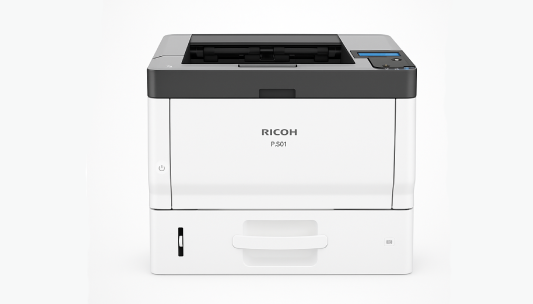
An example of the application of these technologies is the Ricoh IM C400F, a multifunction printer that increases efficiency in IT processes through its smart functions.
Economic Benefits of IT Service Automation
The economic benefits of IT service automation are significant. According to a 2022 McKinsey study, companies could reduce their operating costs by up to 30% through automation. In addition, 54% of companies report that they were able to significantly increase productivity by implementing automated systems.
real-world case studies
A good example of the effectiveness of IT service automation is the management consultancy Deloitte. They implemented a comprehensive automation strategy that optimized the documentation process and reduced the processing time for requests by 451TP3D.
Another example is Deutsche Telekom, which successfully used RPA tools to automate repetitive tasks in customer service. This led to a significant improvement in customer satisfaction.
International Trends in IT Service Automation
However, IT service automation is not limited to Germany. There are numerous international trends that are also important here:
- Cloud services: More and more companies are moving their services to the cloud, which makes automation easier.
- Remote Work: The increase in home offices requires new solutions for IT service automation.
- Cyber-Security: Automation is also used to implement security policies more effectively.
Due to these international trends, it is important that German companies continuously adapt their strategies.
integration of third-party solutions
Successful IT service automation often requires the integration of third-party solutions. These solutions can include both software and hardware products:
- External cloud services for data processing.
- Hardware solutions such as the Ricoh B027 1346that supports efficient document management.
Selecting the right third-party providers is crucial to integrating automation into existing systems.
Risks and Challenges of IT Service Automation
Despite the numerous benefits, there are also risks and challenges with IT service automation:
- Technological dependence: Excessive reliance on technology can pose data security risks.
- Initial costs: The implementation of new systems can involve high initial investments.
- Resistance of employees: Employees may be against automation because they see their jobs threatened.
future of IT service automation
The future of IT service automation is promising. With the continuous development of AI and other technologies, automation is expected to take up an even larger part of services. Companies that proactively use these technologies can gain decisive competitive advantages.
To ensure the right start, companies should develop a comprehensive IT service automation strategy to take the above points into account and fully exploit their potential.
In today's business world, intelligent IT service automation is no longer just a trend, but a necessity. Companies that are willing to invest in these technologies and adapt their strategies will be able to compete successfully in the changing market.